

TTG’s Ultimate Guide To Treating Stubborn Scars
 By Becki Murray
4th February 2025
Updated: 27th January 2026
Updated: 27th January 2026





LOADING . . . PLEASE WAIT
 TWEAKMENT
TWEAKMENT & SKINCARE FINDER
CHOOSE AN AREA OF THE FACE OR BODY TO CHECK OUT YOUR SKINCARE AND TWEAKMENT OPTIONS

 By Becki Murray
It’s fair to say that I’m quite the unwilling authority when it comes to scars. After two operations in my early 20s (thank you, bad joints and too much netball), the most significant and noticeable ones are on both of my knees. But I also have the pleasure of smaller ones on my face (from childhood chickenpox), and my hand (after a nasty run-in with a shattered bottle of champagne, no less). Until recently, I assumed I’d be living with them all for the rest of my life. But, the tweakments world is offering solutions like never before…
Traditionally, scars – especially larger surgical ones and pitted acne scars – were incredibly stubborn and difficult to make vanish, mainly due to the complex healing processes involved when a scar forms. While the skin has ‘repaired itself’, the scar tissue that forms is structurally different from the surrounding skin. It’s primarily made of dense collagen fibres, making it less flexible and hard to return to ‘normal’. No two scars really look alike either. They can vary widely from superficial discolourations to deep and raised (hypertrophic or keloid) or indented (atrophic), making ‘one size fits all’ solutions difficult to find.
Nowadays, though, a shift has occurred – something I noticed when I was in Thailand last year at the Alma Academy Conference. Doctors left, right and centre were particularly keen to show off incredible scar rejuvenation results for everything from motorcycle accidents to C-section scars. So, what innovative technologies are there now for scars (if you don’t want to put up with them)? From laser therapy and microneedling to injectables, here’s the TTG guide to scar management.

Laser technology has just got better and better for scars, with multiple device-led options to choose from. Fractional CO2 lasers are your go-to for larger, deeper scars. They emit a high-energy beam of light, which is absorbed by the water in the skin. This means they can vaporise the outer layer of the scar tissue, while also creating columns of micro-injuries to stimulate scar-smoothing collagen and elastin production really deep within the target area. With these devices getting more precise (limiting what can be significant downtime), this not only helps to smooth out large scars, but improves overall skin texture and firmness, too.
If the colour of your scars is what bothers you (and you want less downtime), choose a laser that targets the pigment or red blood cells in your skin. For example, if your scar is flat and white, the lack of pigmentation is usually a result of the scar tissue not producing enough melanin after healing, so you need a laser – such as a picosecond laser that emits ultra-fast pulses of light that stimulates the underlying melanin-producing cells in the skin. Or, for darkened or vascular (red or purple scars), try a Nd:YAG laser. These are non-ablative, meaning they don’t remove the outer skin layer, but they penetrate deep into the skin to break up pigment and vascular irregularities.
Best for: large or pigmented scars
Pain: elastic band-like snaps reduced by numbing cream
Downtime: up to a week, including swelling and redness
Brands to know: Lumenis AcuPulse, Secret Duo by Cutera, Alma Harmony XL Pro, DEKA SmartXide
Both microneedling and RF microneedling are extremely popular treatments for scars, due to their ability to work simultaneously on the surface of your scar and deeper within your skin, with great accuracy. Traditional microneedling uses a device covered in tiny needles that is rolled over your skin, creating micro-injuries that stimulate healing and the production of collagen and elastin (key components in healthy, non-scarred skin). As the skin heals, it becomes smoother and more even, gradually filling in depressions left by scars and improving overall skin tone.
RF microneedling supercharges this process. It combines the benefits of traditional microneedling with radiofrequency energy, which is delivered through the microneedles. This energy penetrates deeper into the skin for even better collagen stimulation and improved skin tightening, making it especially effective for more stubborn, deeper scars.
Best for: raised scars
Pain: uncomfortable scratching feeling, plus additional heat for RF microneedling
Downtime: short-lived swelling and redness
Brands to know: Sylfirm X and SkinPen Precision

If you’ve managed to clear up your acne, it can be so frustrating to be left with deep, pitted scars, like boxcar or rolling scars, as a reminder of the struggle you’ve faced. Luckily, that’s where dermal filler injections can come in. While not directly treating the scar tissue (or the underlying cause of your acne) what dermal filler can do is add targeted volume beneath the surface, smoothing out uneven skin texture by ‘filling in’ the gaps that formed as your acne healed. The effects – as with all dermal filler – are temporary, for up to 18 months, but it is much faster than treatments that rely on stimulating your own body’s healing process, and it can be pinpoint accurate.
Best for: acne scarring
Pain: short discomfort from injections
Downtime: some potential bruising, soreness and redness
Brands to know: Restylane, Lanluma, MaiLi and Sculptra
If your main concern around your scar is the discolouration and skin roughness that makes it more noticeable, then mild-to-medium-depth peels, such as TCA peels, are a great first step. Basically a stronger version of the peels you can get for at-home use, in-clinic peels use a cocktail of exfoliating acids to deeply exfoliate and remove the dead, dull skin surrounding your scar, while also stimulating healing and regeneration deeper within the skin. This can improve overall skin quality in the treated area, and, as a highly customisable treatment, side effects such as peeling and redness can be limited if required.
Best for: tackling discolouration
Pain: warm, tingling sensation in treated area
Downtime: low to medium depending on peel strength
Discover our favourite chemical peel brands to know
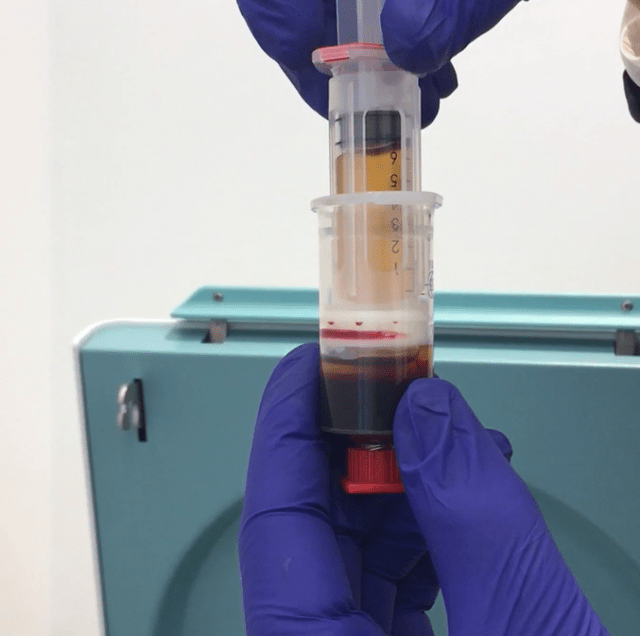
Platelet-Rich Plasma (PRP) therapy – which is potentially best known as the ‘Vampire facial’ or for hair rejuvenation – can be used to treat scars too, especially pitted ones. That’s because pitted scars involve a loss of collagen at the surface of your skin, leading to indentations, and PRP works to stimulate renewed collagen production, by triggering your body’s natural healing processes. First, your practitioner will draw some of your blood from your arm, before spinning it in a special machine to separate the platelets (which are rich in growth factors). This is then reinjected into your scar so that over time – and with patience – your scar appearance improves.
Best for: small, pitted scars
Pain: mild stinging from injections
Downtime: some mild redness or swelling
Discover our favourite PRP brands to know now
Find out more about scar treatments on our scars concern page.

Skincare
The trend for microneedling at home shows no signs of going away and for those of you who’ve been...

Tweakments
Tweakments in 2026 are shaping up to be all about enhancing skin quality. Not sharper cheekbones, defined...

Tweakments
There’s always, ALWAYS, a tantalising selection of new treatments and protocols popping up in the world of...

Skincare
Want to know what tweakments and skincare everyone was fascinated by in 2025? We’ve rounded up our

Hi, I’m The Tweakments Guide chatbot (Beta Version).
I’ve been designed to answer your questions about tweakments, skincare, practitioners, or any related concerns. For example, you can ask questions like:
I will try to give you the advice you need but I am currently in training so I would love any feedback you might have.


 The Tweakments Chatbot