LOADING . . . PLEASE WAIT

Tweakment Finder TWEAKMENT
FINDER
CLOSE

WHAT'S BOTHERING YOU

CHOOSE AN AREA OF THE FACE OR BODY TO CHECK OUT YOUR SKINCARE AND TWEAKMENT OPTIONS

Dermaplaning

alice avatar

Written by: Alice Hart-Davis

Updated by: Becki Murray

Last Updated: 12 January 2024

What is dermaplaning?

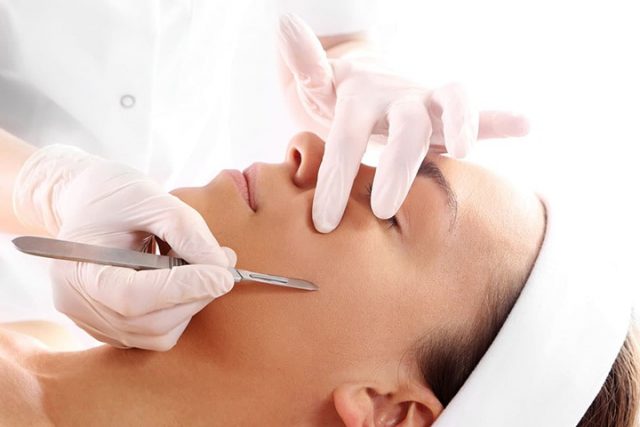
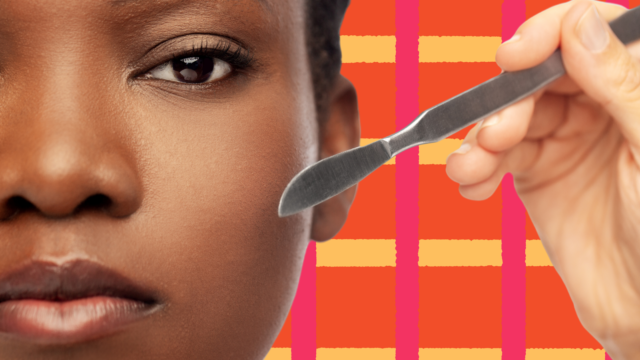
The idea of having your skin shaved, free-hand, with a scalpel may not sound like fun, but this is a gentle if rather advanced form of exfoliation, carried out by a well-trained skin specialist using an ultra-fine scalpel. It’s a swift way to improve skin texture on the surface, because careful shaving not only removes the top layer of dead, polluted skin cells that make the face look dull, but also all the ‘peach fuzz’ vellus hair on the face, so your newly-denuded skin feels extra smooth. It will also be that bit more receptive to skincare ingredients and that bit more sensitive to UV light, so stock up on sunscreen. The treatment can also technically be used on the body – although it’s much less common – where its touted for its ability to exfoliate away dead skin cells, improve the penetration of your favourite body creams, and help you avoid ingrown hairs when shaving.

Dermaplaning apparently dates back to Ancient Egypt, which has led at least one tweakments clinic to offer the treatment under the name, ‘the Egyptian Facial’. Cleopatra was a certified tweakments trailblazer and would bathe in sour milk (which is basically lactic acid) and fruit juice (a combination of glycolic and mandelic acid) to exfoliate and soften her skin before her face was very carefully shaved with a sharp blade. While the tools we use now have come on a lot, the principles remain almost exactly the same. Scroll down for all the info and FAQs about dermaplaning.

EXPECT TO PAY

£ 150

Icon Ttg Time

TWEAKMENT TIME

2 hours

Icon Ttg Longevity

LONGEVITY

3 months

Icon Ttg Anaesthesia

ANAESTHESIA

None

Icon Ttg Downtime

DOWNTIME

None

Enter your postcode

Does dermaplaning work?

Dermaplaning is an extremely effective method of exfoliation. In less than an hour, your skin can go from tired and rough to bright and smooth. Make-up glides on more easily without the rough top surface getting in the way and your skin’s new preternatural smoothness will look great in photographs as smoother skin reflects the light more evenly. There’s a reason it’s so popular with celebrities and supermodels.

Unfortunately, dermaplaning isn’t suitable for absolutely everyone. If you have really sensitive skin or severe acne/rosacea, then anything that irritates the skin is going to be a bad idea. Dermaplaning falls into that category, so you’ll want to give it a miss.

How does dermaplaning work?

Your practitioner takes a 10-gauge scalpel and, holding it at 45-degrees to the skin, scrapes away at the top-most layer of your skin. Actually, ‘scrapes’ is too harsh a word, as the scalpel is used so gently that you can only just feel it.

The practitioner uses short, controlled strokes and works their way methodically over your skin. This removes the accumulation of crusty dead cells that give your skin a rough-looking texture and at the same time takes away the wispy vellus hairs. This exposes the more recently produced skin cells, which have a brighter and more youthful appearance, making your skin look rejuvenated and glowing.

dermaplaning

Top tips: Starting a skincare routine

What are the benefits of dermaplaning?

The main benefits of dermaplaning are:

  • Incredible exfoliation that leaves you glowing for a week;
  • Soft, soft skin – one thing you shouldn’t really be doing after dermaplaning is touching your skin, but will you want to keep feeling it;
  • Smoother texture – and I mean porcelain-smooth skin that’s readily apparent to the naked eye;
  • It removes facial hair – this can be a goal in itself, but it also means that the skin doesn’t trap as much dirt and oil throughout the day, keeping your skin looking brighter for longer;
  • Faster skin cell turnover – the body renews skin cells on average every six weeks, but dermaplaning gives you a shortcut to those vibrant new skin cells that lurk beneath the surface;
  • It’s a better surface for make-up – foundation goes on without issue and with minimal blending required, leaving you looking almost airbrushed;
  • It reduces the risk of ingrown hairs after shaving your legs by removing the dead skin that can trap hairs in the follicle. However, it’s not recommended for the sensitive bikini line.

RELATED CONCERNS


Acne

Acne is one of the most common skin complaints out there, and one we’ve pretty much all had to deal with at one time or another. ...

Read More
Dry Rough Skin

Many people suffer with dry skin on their face and/or body. There are a number of factors that cause dry skin and its severity will vary...

Read More

What can I do after dermaplaning? Dermaplaning aftercare explained…

Sunscreen, sunscreen, sunscreen. Without the dead cells on the skin’s surface, you’ll be a little more susceptible to the sun’s UV rays, so make sure to be especially diligent in applying sunscreen after your treatment and avoid direct sunlight wherever possible.

Don’t touch!

The exfoliation is excellent with dermaplaning and any products the practitioner uses – serums and creams, etc. – will sink right in. However, the same applies for dirt and grime – they’ll sink right in there too. For the first few hours after treatments, try to avoid touching the treated area – this is precautionary best practice though, so don’t worry too much if you do. Just make sure to remove any visible dirt with a mild and gentle cleanser at the first opportunity.

Does dermaplaning make the hair grow back thicker or more bristly?

Hair thickness is determined by the interaction between hormones and your hair follicles, which reside in the dermis, the layer of skin below the top surface. Dermaplaning obviously doesn’t involve any hormones and it only scrapes at the epidermis, the outer layer, and doesn’t get anywhere near the follicles, meaning there’s no way it can affect the thickness of the hair.

What dermaplaning does do is cut the vellus hairs about two-thirds of the way up the shaft. Technically, this leaves a cut edge that you might think would feel sharp and bristly, but because vellus hairs are so thin, so delicate, and so very soft, the fact is you just can’t feel the cut edge, so there is no bristliness to worry about.

If you’ve heard stories about how shaving can increase hair growth and coarseness, this is a myth that has been prevalent since the 1920s that you can happily resign to the rubbish pile. For more information, download my full dermaplaning factsheet, where I go into further scientific detail about why the hair doesn’t (and can’t!) grow back thicker due to dermaplaning or shaving.

Dr Hannah Chapman

Cosmetic Doctor

KinDRed Clinic, 49 North View, Westbury Park, Bristol, BS6 7PY

Dr Hannah is a well known and respected Bristol GP and has been a doctor for over 18 years. In 2024, she opened KinDRed Clinic - one of Bristol's only...

Lucy Phillips

Cosmetic Nurse-Prescriber

Kaizen Medical Clinic, 7 Brook Lane, Warsash, Southampton, SO31 9FH

Lucy Phillips is the Founder and clinical director of Kaizen Medical Clinic, a leading skin and aesthetics practice based in Southampton....

Olivia McCabe-Robinson

Cosmetic Doctor

Dr Olivia Medispa, 25 Norfolk St, Glossop, SK137QU

Dr Olivia McCabe-Robinson is known for her academic excellence, surgical background and dedication to ethical, patient-focused care. After graduating in...

Dr Sravanthi Pasapula

Cosmetic Doctor

The Cosmetic Clinic, Unit 8 North Lynn Business Village, Bergen Way, North Lynn Industrial Estate, Kings Lynn, PE30 2JG

Dr Sravanthi Pasapula MBBS MRCGP DRCOG DFSRH is an experienced Medical Doctor specialising in non-surgical rejuvenation. She is the Medical Director of The...

FAQ ABOUT Dermaplaning


Is dermaplaning safe?

Yes, absolutely. In the right hands. It’s entirely reasonable to entertain a certain level of apprehension about having your skin worked over with a very sharp knife by someone you’ve only just met. However, as long as you